Burning Air

Original study for MozScore

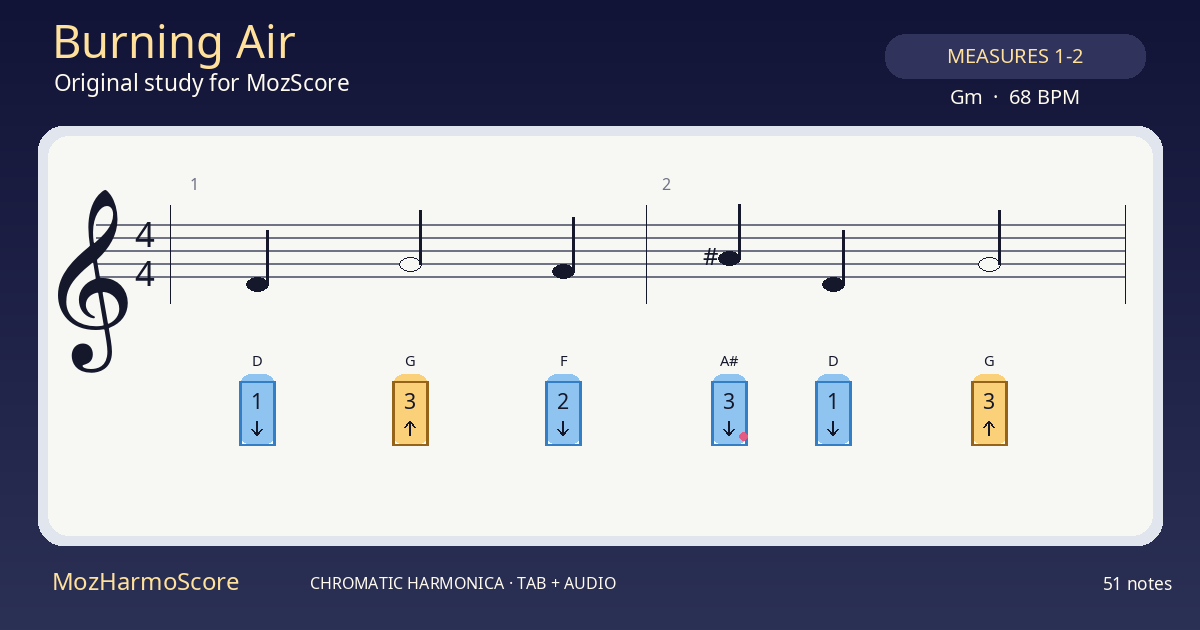
Free Burning Air harmonica notes and tab for chromatic harmonica, synchronized with audio. Key Gm, 68 BPM — slow it down and practise.

Studies / exercisesEasy51 notesGm68 BPM
MozHarmoScore

About this score

Burning Air is an original study designed to establish simple reference points on the chromatic harmonica. Its calm tempo allows time to listen to each note, prepare the breath, and identify the tonal shifts characteristic of G minor. The melody stays within a medium range and mainly uses quarter and half notes, making it an accessible and progressive exercise. Practice in short phrases without forcing the air, then connect them smoothly with legato. The altered notes require precision and calm: prepare the button before playing each altered note.

Presentation

Burning Air is an easy chromatic harmonica study in G minor, set at a relaxed tempo of 68 BPM. Its 16 measures emphasize a clear melodic line within a medium range from low C4 to high D5. The use of quarter and half notes helps develop pulse control without speed pressure. The 14 altered notes add minor color and invite precise button preparation. This piece is excellent for listening to tone, stabilizing breath, and building natural legato phrase by phrase.

Why learn this piece

This easy study helps coordinate breath, reading, and chromatic button use at a comfortable tempo. It develops a reliable pulse while clearly expressing the G minor tonality.

Skills developed

Legato★★★☆☆
Swing★★☆☆☆
Chromatic button★★★☆☆
Rhythm★★★☆☆
Speed★★☆☆☆
Expression★★★★☆

Music DNA

Jazz feeling35%
Expression58%
Technique73%
Breath50%
Reading51%
Improvisation35%
Rhythm45%
Chromatic button71%

AI musical analysis

The score contains 16 measures and 51 notes at 68 BPM in G minor. It stays within a medium range from C4 to D5, with a maximum interval of a seventh approached without tension. The rhythm is dominated by quarter notes, complemented by half notes requiring steady pulse. Fourteen altered notes, about 27% of the total, provide the piece’s color and require calm button preparation.

Technical data

Notes51
Measures16
Tempo68 BPM
KeyGm
Lowest noteC4
Highest noteD5
Max intervalseventh
Dominant rhythmquarter notes
Altered notes27%
Avg. breath6.4 notes
Fast rhythms0
Rests0
Repeated notes0
Ties0
Rangemedium

Progression plan

Day 150 BPM

Slow reading of the first two lines.

Day 260 BPM

Stabilize breath and phrase connections.

Goal68 BPM

Play cleanly at the target tempo of 68 BPM.

Musical goals

  • Maintain a steady pulse on quarter and half notes.
  • Control a soft breath in the medium register.
  • Prepare altered notes with the chromatic button.
  • Connect short phrases with natural legato.

Common mistakes

  • Forcing breath to reach high notes.
  • Pressing the button after starting an altered note.
  • Speeding up after half notes or direction changes.
  • Letting interval jumps create unintended accents.

Coach tips

  • Sing each short phrase before playing to internalize its direction.
  • Practice first without vibrato to check intonation and button timing.
  • Keep hands relaxed; prepare the button with economical movement.
  • Record a slow take and ensure each half note maintains the same tempo.

If you liked this piece

Tab analysis and practice

AI summary

Easy G minor study focusing on steady breath, regular pulse, and calm preparation of altered notes.

Suggested tempo52 -> 68 BPM

Practice goals

  • Play all 16 measures with a steady pulse, avoiding speeding up.
  • Maintain a soft and even tone in the medium register.
  • Prepare altered notes without interrupting the melodic line.

Passages to isolate

  • Isolate transitions between F, A, and B♭ to keep a clean attack.
  • Slowly repeat passages with E♭ and F♯.
  • Practice the jump to high D without pushing the breath.

Focus points

  • Breathe discreetly at the ends of long phrases without breaking the pulse.
  • Count quarter and half notes with a stable internal pulse.
  • Press and release the button with a light, anticipatory motion.

Coach

  • Use minimal air and keep the throat open; consistency matters more than volume.
  • Prepare the button just before altered notes, then release it smoothly without abrupt movements.
  • Gently mark the four beats before linking phrases.
  • Avoid lengthening half notes and rushing the returns to lower notes.