What a Wonderful World
George David Weiss et Bob Thiele
Free What a Wonderful World harmonica notes and tab for chromatic harmonica, synchronized with audio. Key F, 69 BPM — slow it down and practise.
Pop / varietyBeginner162 notesF69 BPM
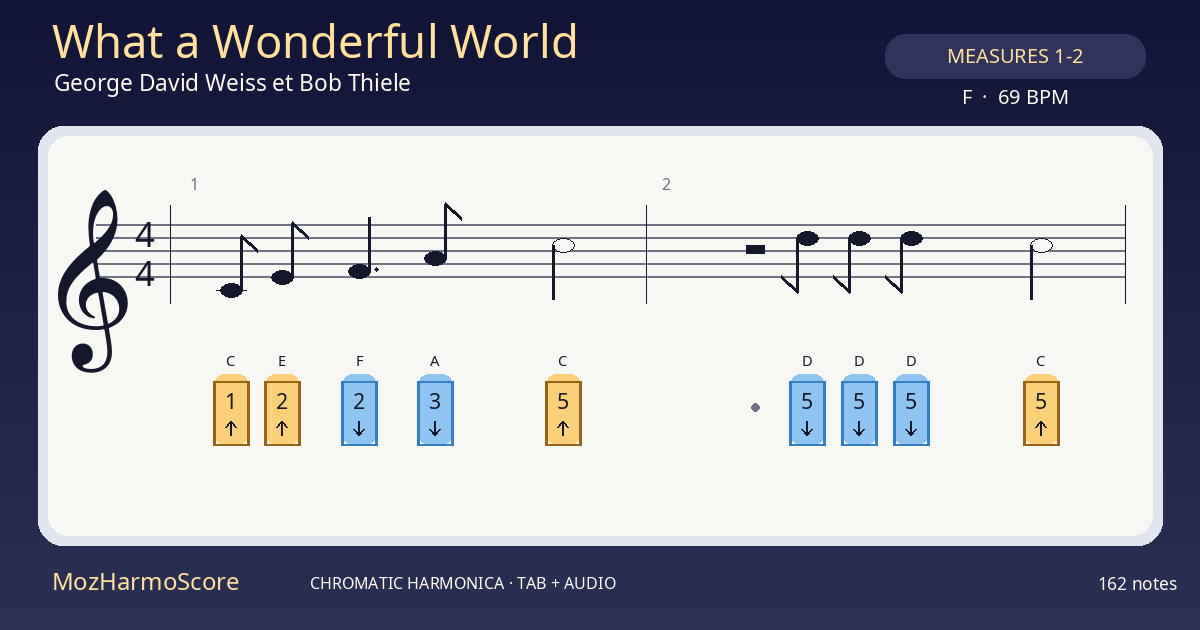
Free What a Wonderful World harmonica notes and tab for chromatic harmonica, synchronized with audio. Key F, 69 BPM — slow it down and practise.
Composed by George David Weiss and Bob Thiele, What a Wonderful World became a popular standard notably through Louis Armstrong's rendition. Its calm melodic line is ideal for a first expressive approach on the chromatic harmonica. Focus on sound continuity and stability of repeated notes rather than rushing the final tempo. Musical rests prepare relaxed phrasing. The score includes some altered notes; identify them beforehand and practice the chromatic button action separately. A simple, steady, and well-breathed interpretation is more effective than premature effects.
This premium mini-course guides you through mastering What a Wonderful World on chromatic harmonica. Designed for beginners, it emphasizes breath control, smooth legato phrasing, and precise chromatic button use. Step-by-step practice plans help build confidence and musicality at a comfortable tempo, ensuring a solid foundation for expressive playing.
Learning this piece develops essential skills like controlled breathing, note stability, and chromatic button coordination, all within a beautiful, well-known melody that motivates consistent practice.
Set in F major at 69 BPM, the piece features 174 notes with a medium range from C4 to D5. It includes 15 altered notes (9% of total), requiring chromatic button use. The rhythm mainly consists of eighth notes with 12 rests and 28 ties, promoting smooth legato phrasing. The largest interval is a seventh, offering moderate melodic leaps suitable for beginners.
Slow reading of the first two lines
Stabilize breath and legato connections
Play cleanly at target tempo
Practice this slow melody in groups of two to four measures. The main challenge is maintaining a connected sound despite repeated notes, sustained values, and breath changes. The fifteen altered notes require calm preparation of the chromatic button.