Generale

Francesco De Gregori

Free Generale harmonica notes and tab for chromatic harmonica, synchronized with audio. Key G, 120 BPM — slow it down and practise.

Pop / varietyEasy256 notesG120 BPM
MozHarmoScore

About this score

Generale by Francesco De Gregori features a clear and memorable melodic line. At 120 bpm, it remains accessible when approached in short phrases rather than attempting all 58 measures in one breath. The many repeated notes provide solid rhythmic anchors. Mentally hear the pulse, observe the written breaths, and maintain a soft tone: the simple melody gains presence when played smoothly and connected.

Presentation

This easy-level adaptation of Generale for chromatic harmonica focuses on steady rhythm and melodic flow. The 58-measure score relies heavily on eighth notes, repeated notes, and singing phrases. Its medium range from B4 to C6 allows comfortable work transitioning between middle and upper registers. The 16 altered notes invite calm use of the chromatic button with anticipation in a simple musical context. Start slowly, break down ties, and gradually increase to the target tempo of 120 bpm.

Why learn this piece

This piece helps establish a stable pulse while developing connected melodic lines. Its repetitions aid memorization and allow focus on sound quality. The few altered notes provide a gentle introduction to chromatic button use.

Skills developed

Legato★★★★☆
Swing★★☆☆☆
Chromatic button★★☆☆☆
Rhythm★★★☆☆
Speed★★☆☆☆
Expression★★★★☆

Music DNA

Jazz feeling35%
Expression70%
Technique77%
Breath100%
Reading79%
Improvisation35%
Rhythm57%
Chromatic button16%

Technical data

Notes256
Measures58
Tempo120 BPM
KeyG
Lowest noteB4
Highest noteC6
Max intervalseventh
Dominant rhythmeighth notes
Altered notes6%
Avg. breath8.8 notes
Fast rhythms0
Rests12
Repeated notes130
Ties32
Rangemedium

Progression plan

Day 184 BPM

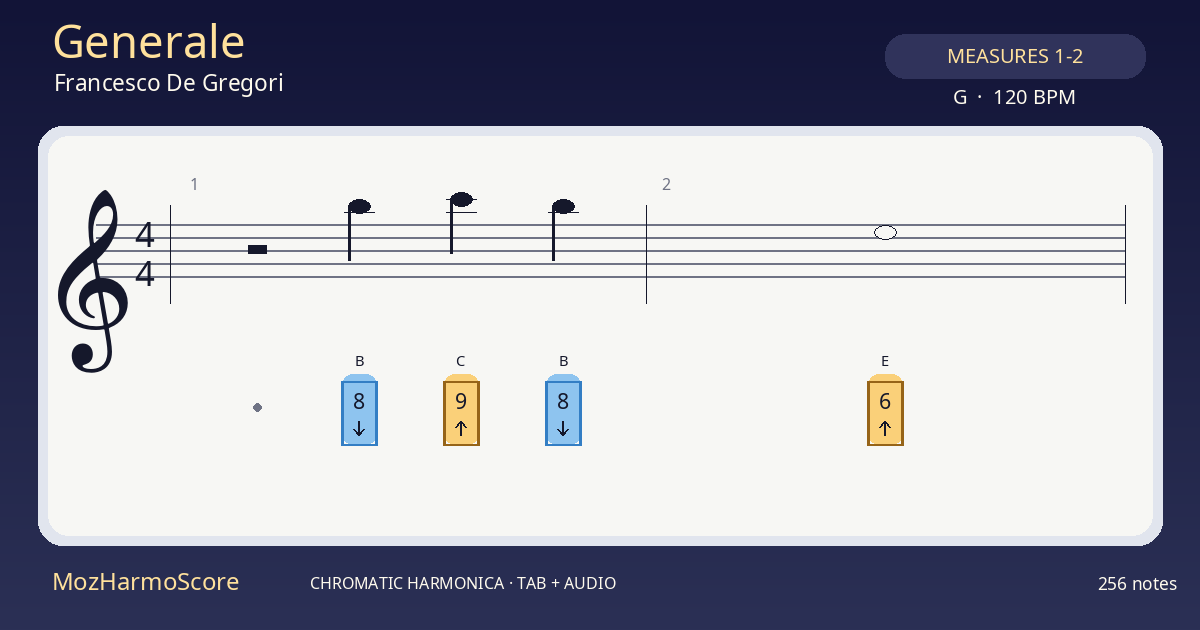
Slow reading of the first two lines.

Day 294 BPM

Stabilize breath and ties.

Goal120 BPM

Play cleanly at the target tempo of 120 bpm.

Musical goals

  • Maintain a steady eighth-note pulse.
  • Articulate repeated notes smoothly.
  • Connect tied phrases without breaks.
  • Use the chromatic button with anticipation.

Common mistakes

  • Unconscious speeding in repeated note groups.
  • Breaking ties to take excessive breaths.
  • Pressing the chromatic button too late for altered notes.
  • Forcing breath on high notes near C6.

Coach tips

  • Mark strong beats subtly with foot tapping before playing.
  • Isolate a measure of repeated notes and play very softly to control evenness.
  • Prepare the chromatic button just before the altered note without abrupt movement.
  • Record a slow take: first check rhythm, then tie continuity.

If you liked this piece

Tab analysis and practice

AI summary

Work on this melody in phrases of two to four measures. The medium range from B4 to C6 is comfortable, but the 16 altered notes require calm preparation of the chromatic button. First stabilize the eighth notes and repeated notes, then connect the ties without breaking the airflow.

Suggested tempo70 -> 120 BPM

Practice goals

  • Establish a steady pulse of eighth notes at 120 bpm.
  • Play repeated notes with a light and even attack.
  • Prepare the 16 altered notes without audible slowing.
  • Maintain a smooth legato in tied phrases.

Passages to isolate

  • The opening around B5 and C6: calmly secure pitch before continuing the phrase.
  • Groups of repeated notes near D5: keep the pulse steady without over-accenting.
  • Ties on repeated notes: sustain sound continuously until the next note.
  • Passages with F#: anticipate the chromatic button and check tuning.

Focus points

  • Breathe at written rests rather than mid-tie.
  • Count eighth notes quietly to avoid timing slips.
  • Keep airflow steady on long notes.
  • Relax shoulders before ascending phrases toward C6.

Coach

  • Take short breaths at rests and avoid overfilling or emptying the instrument in one phrase.
  • Anticipate each altered note and press the chromatic button cleanly without disturbing airflow stability.
  • Practice with a metronome: one beat per quarter note, ensuring each eighth note falls evenly between beats.
  • Do not confuse speed with rushing: repeated notes must remain equal even as tempo increases.