L'isola che non c'è
Edoardo Bennato
Free L'isola che non c'è harmonica notes and tab for chromatic harmonica, synchronized with audio. Key G, 80 BPM — slow it down and practise.
Pop / varietyEasy161 notesG80 BPM
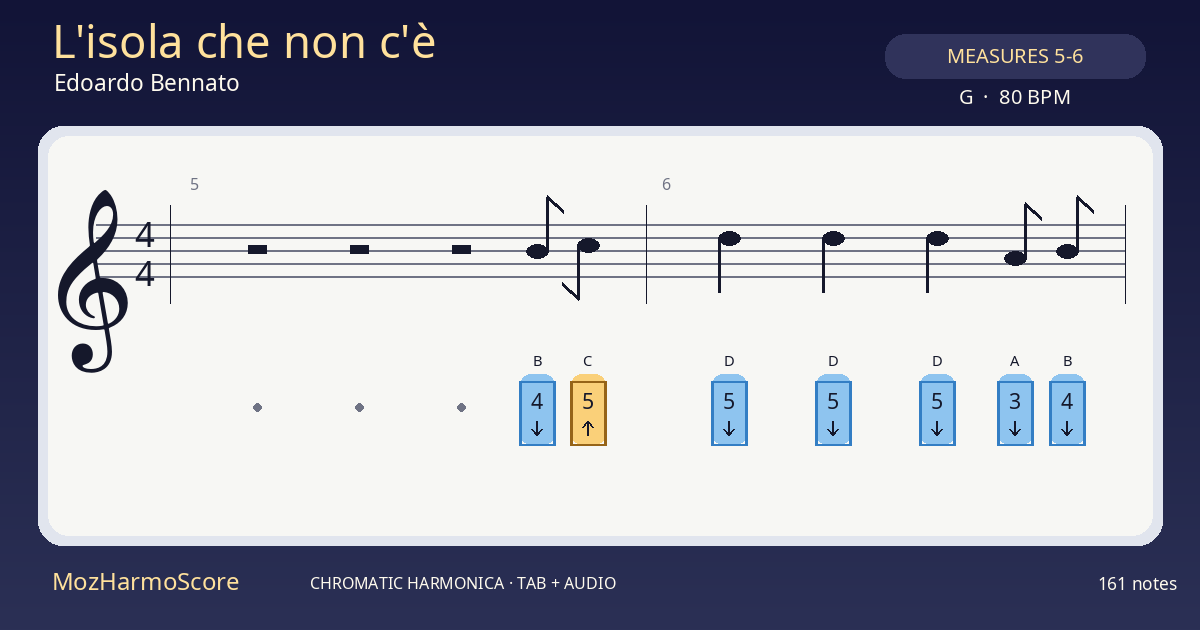
Free L'isola che non c'è harmonica notes and tab for chromatic harmonica, synchronized with audio. Key G, 80 BPM — slow it down and practise.
This adaptation introduces a pop melody by Edoardo Bennato in a progressive way. Before increasing speed, identify rests and mentally sing each phrase without lyrics. The score stays within a medium range from A4 to A5, easing initial instrument orientation. The fifteen altered notes provide a practical introduction to the chromatic button. Work in small measure groups, then connect them with calm breath. The goal is a clear, steady, and pleasant line rather than immediate full performance.
This mini-course offers a clear first approach to L'isola che non c'è on chromatic harmonica. The melody mainly moves in quarter notes at a moderate 80 bpm, with several useful rests for breathing. Its medium range limits large jumps, while some eighth notes, sixteenth notes, and altered notes introduce progressive challenges. You will learn to identify phrases, maintain a steady pulse, and use the chromatic button without tension. Start slowly, measure by measure, then combine sections once notes are secure and well articulated.
This piece simultaneously develops reading skills, rhythmic steadiness, and initial chromatic button techniques. Its moderate tempo and many rests allow steady progress without rushing.
The score is in G major, spanning from A4 to A5 in a medium range. Quarter notes dominate, with some faster rhythms to isolate. Repeated notes require light articulation, while fifteen altered notes call for simple chromatic button preparation. Rests structure phrases and provide natural breathing points.
Slow reading of the first two lines.
Stabilize breath and phrase connections.
Play cleanly at target tempo.
Practice this score slowly by separating rhythm reading, spotting altered notes, and linking phrases. Frequent rests help breathing but require precise re-entries.